

You sit down to work. Within 20 minutes you’ve hunted for a file, replied to three texts, fixed a billing issue, answered a question that could have been an email, and completely lost what you were even working on.
This isn’t about being lazy or disorganized. Your day simply has too much “sand in the gears”.
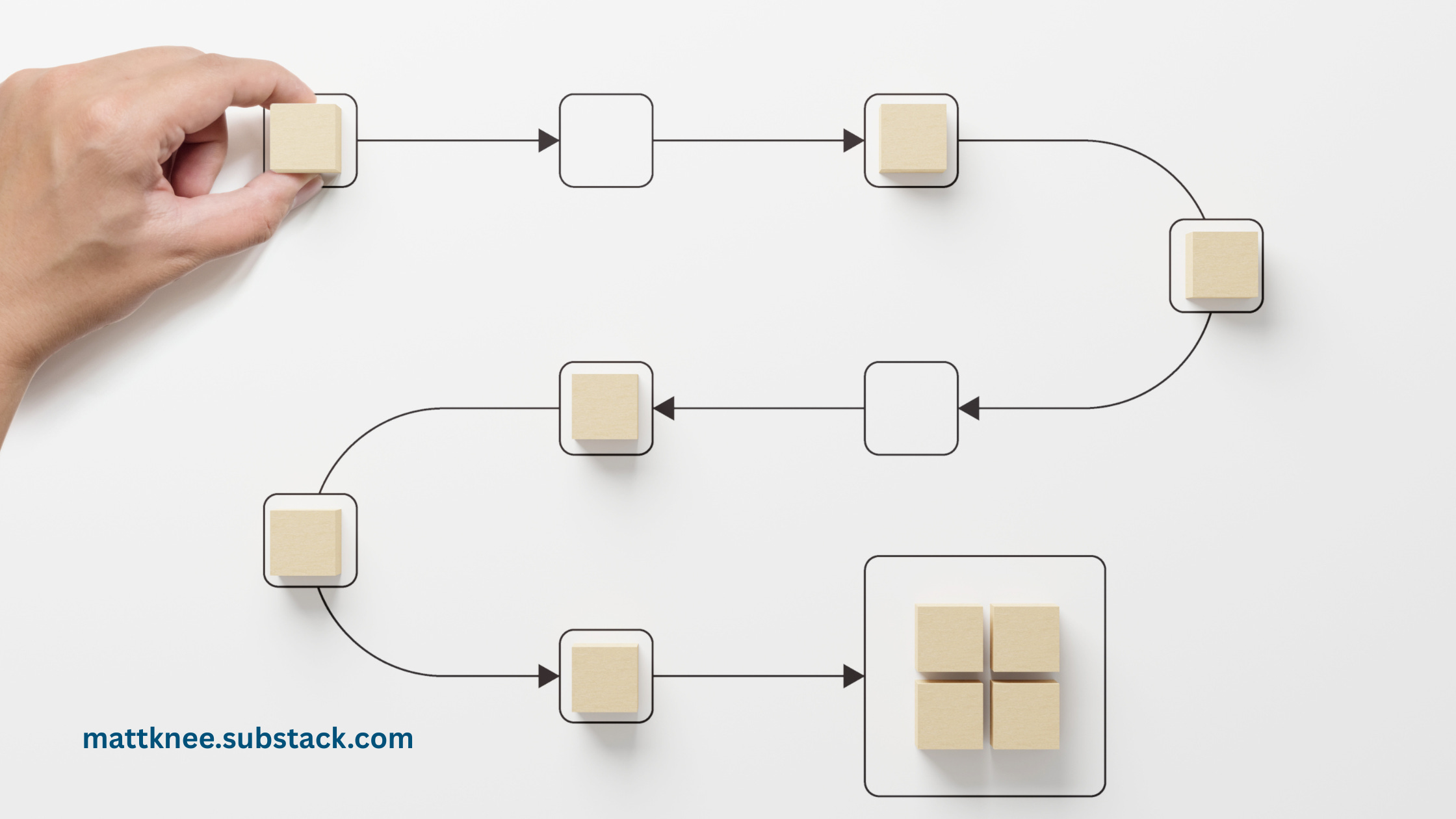
This is what workflow is actually about. Not the best project management software. Not color-coded calendars. It’s about removing the low-grade friction that hijacks your attention before you ever get to the work that matters.
The Real Problem Most People Have
Most people think they have a time problem. Or a motivation problem. Or a discipline problem.
They don’t. They have a friction problem.
Friction is everything that gets between you and forward motion: too many inboxes, scattered tasks, vague communication, constant context-switching. Each one is minor on its own. Together, they make your day feel like running in wet concrete. You’re expending energy constantly but not going anywhere.
Here’s what friction actually costs you: research shows that once you’re interrupted, it takes 5 to 15 minutes to get back into full focus. If that happens 10 times in a day, which is conservative, you’ve spent hours on nothing. Not on hard problems. Not on creative work. You’ve lost it simply trying to get back on track.
And here’s something worth noticing: There’s a Silicon Valley observation that the busiest, most successful people tend to respond fastest. The most effective people tend to move through their day with less visible chaos. They respond quickly, make decisions fast, and seem to have more time. It’s not that they’re smarter or work longer hours. They’ve simplified. Fewer inputs. Cleaner systems. Less sand in the gears. The simplicity looks like confidence from the outside, but it’s really just a better-designed, more fluid day.
It’s important to remember the most important thing in communication: That’s where opportunities are. If someone is reaching out and it could be a huge business or personal opportunity, who do you think is getting it? The person who responds in minutes or the person who takes 5 days (or simply misses it in the chaos of their inboxes)?
What is Workflow?
Workflow is not a complex system. It’s just how you handle the routine stuff so you can protect the time and energy needed for the important stuff.
Think about everything that comes at you daily. It really breaks down into three things:
Inputs (emails, tasks, messages, notifications)
Outputs (what you send to others)
Communication (the back and forth).
That’s it. Your entire daily chaos is just those three categories out of control.
The goal is to reduce all three so you can stop fighting your day and start directing it.
How to Fix It: The Workflow Basics
None of this is complicated. But most people have never deliberately set any of it up, so their day runs them instead of the other way around.
Minimize your inboxes. Every place you receive inputs is another tax on your attention. One email address. One task app. One notes app. One physical inbox. I’ve seen people with multiple inboxes, task apps, notes apps and it’s madness. If people are reaching you across five different platforms, pick one and let people know where to reach you and let the others go quiet. Every additional inbox is another source of stress you didn’t consciously choose.
Capture everything in one place. Tasks go in your task app. Notes and information go in your notes app (or notebook). This sounds obvious but almost nobody does it. The reason it matters is trust. If you don’t trust that everything is captured somewhere, your brain runs background processes trying to remember things. That low-grade hum of “don’t forget, don’t forget” kills focus and creates stress even when you’re not consciously thinking about it. One place for tasks, one place for notes.
If you’re on the go, text yourself or use voice capture. The habit of capturing instantly is critical, there are simply too many distractions these days and you will forget if you don’t have a system. Pro tip: Keep a note called “@Inbox” that is sorted to the top of your notes app for quick things like phone numbers, room numbers, quick notes.
Stop communicating haphazardly. This one is underrated. Have you ever sent a quick half-thought-out email or text and watched it spiral into a 50-message thread that ate half your day? Every careless or confusing message creates a cycle of replies. It stirs up dirt at the bottom of the fountain. One well-crafted email, text or a single short call can replace a dozen scattered messages. Less is more. Communicate carefully, strategically, and as infrequently as the situation actually requires.
On a related note, stop communicating like this in text or chat:
- Hey
- Quick question
- If you have a moment
- Wanted to pick your brain on XYZ
- I think it’s up your alley
- I’m available this week for a call
- Thanks!
That’s 7 notifications you just bombarded someone with (not to mention these are not easily marked unread, copied into a note or task for them to follow up) and trust me a busy person hates it. Put it all in one message, short as possible (5 sentences is generally considered a good limit on short communications), with an easy yes or no answer:
- Hey, can you have a quick call about XYZ? I think it’s up your alley. I can be available pretty much any afternoon this week. Thanks!
Use filters aggressively. Set up email filters so newsletters, updates, and non-urgent reports go straight to a “Read” folder instead of your inbox. Put your phone on Do Not Disturb during focus time, with exceptions only for the people who genuinely need to reach you. These two changes alone can eliminate the majority of daily interruptions.
Batch similar work. Email two or three times a day, not constantly. Stack calls and meetings back to back on one or two days rather than scattering them throughout the week. Every time you switch between different types of tasks, your brain has to reorient. Five calls in a row are dramatically more efficient than five calls spread across a day. If 5 people are in a meeting for 1 hour, that’s 5 hours spent, not one. Batching prevents context switching, which is the silent killer of real productivity.
Apply the “do it now” rule selectively. If a task takes less than a few minutes and it’s actually worth doing, do it now. Call the dentist. Pay the bill. Send the quick reply. But be careful: if you spend all day on two-minute tasks you’ll make zero forward progress on anything that actually matters. The rule only applies to things worth doing right now which means they are either important or urgent. Everything else goes on a list for batch work later.
Close your open loops. The texts and emails sitting unanswered in the back of your mind are draining mental energy even when you’re not actively thinking about them. These open loops create low-grade stress that compounds over the course of a day. Reply quickly, even if just to say “I’ll get back to you Thursday.” Closing loops cleans up the mental background noise more than most people expect.
Work by energy, not by clock. Not every hour of your day is equal and pretending otherwise wastes both. When you’re sharp, do hard things. When you’re not, do admin, organizing, or routine tasks. You’re still making progress, and often the act of doing something generates the energy to shift into higher-value work. Stop forcing creative work into hours when you have nothing left to give. Remember, you can also generate energy if necessary.
Use a focus ritual. Remember focus is a habit. Use a focus ritual for when you need to do deep work. Remember to prioritize your tasks properly and fix procrastination if you’re having a hard time getting started.
The One Thing to Remember
Your goal is not a more complex system. It’s a simpler day.
Tame the small stuff so you have time and energy for the big stuff. Get off the treadmill of low-level tasks you never consciously chose to be on. That’s all workflow is. And once you set it up deliberately, your day stops feeling like something you’re fighting and starts feeling like something you’re actually in charge of.
If you want a complete system for building this kind of structure into your daily life, this is one of the core frameworks inside Zorga, my personal operating system for getting out of the chaos and into the work that moves your life forward. You can learn more at zorga.io.
Feedback: Like or dislike this article? Leave a comment above, hit reply or submit anonymous feedback here.